Of Books & Archetypes
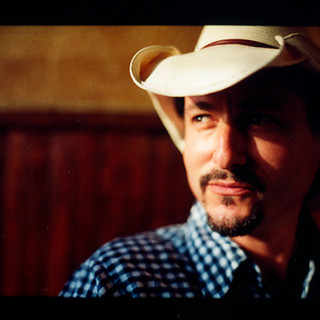

NOTE: What follows is an excerpt from the new Jintero 2.0's foreward. The memoir is due out next month in all formats(print, audio, Ebook and video). What's it about? Here's a publisher blurb for youse:
Jinetero 2.0 is a darkly funny, fearless memoir from Cuban-American musician Jorge Navarro. Built around The Cuban Cowboys’ song “Jinetero,” it traces his first return to Cuba since his family's exile—into a world where sex, survival, and politics intertwine. What begins as a quest for creative renewal turns into a searing exploration of identity, masculinity, and moral compromise. Navarro’s voice—by turns punk, poetic, and painfully funny—captures the contradictions of a country and a self divided by revolution and exile.
Now here's your excerpt (an 'Origin Story' of sorts):
Foreward 2025
I had some high hopes 11 years ago, thinking that I'd found a way to remain artistically active while also honoring the Cuban Cowboy alter-ego or stage character that I’d created back in 1999. By 2010, after years of gigging, touring, writing, drinking, drugging, recording, releasing, hoping, winning and losing more than I could possibly account for herein, I found myself newly divorced, a single father and co-parent of two small children who needed my love and support. Given these circumstances, I couldn’t tour even if it were all somehow fully funded.
I wanted the first edition of Jinetero to be the first in a series of books designed to accompany certain songs that I wrote for my band, The Cuban Cowboys. You can write from anywhere, and you don’t need a band to do so. Plus, I figured that book- writing wouldn’t be too far-fetched, given my stage character’s origins.
The band, like the Cuban Cowboy character or archetype started soon after I’d read a novel called The Wrestler’s Cruel Study by a poetry professor named Stephen Dobyns. Part detective novel, part modern wrestling story, Dobyns' narrative used primal, mythological character types (wrestlers!) to explore the nature of human identity, the conflict between appearance and reality, and the struggle between good and evil. By placing these archetypal figures - the hero, the seeker, the mentor, the trickster, et. al - in the context of professional wrestling, an often-absurd setting, Dobyns elevates what might seem like a simple story into a deeper philosophical and psychological examination. With said elevation in mind, I set out to create my own character, with a cowboy mythology borne of my experience growing up practically fatherless in Miami's Cuban exile community.
To me, the Cuban Cowboy was never meant to be merely a cowboy. He was my ticket to standing out in the music world, to evoking something that Jorge Navarro alone could not. Through music and performance, this character became the actualization of my split identity as a Cuban American: An American icon (Cowboy) singing in Spanglish about his Cuban exile family and Miami upbringing as a kid who "passed" as White when he had to, and chose Rock over Disco from an early age.
On a more professional front, applying Dobyns' book's lessons on archetypes for the sake music and performance also worked in the context of an arts-based Doctoral dissertation. In fact, I was supposedly working on said dissertation when I encountered Dobyns' book. The year was 1998, and I'd just begun writing bilingual songs and performing as the Cuban Cowboy (AKA 'Hialeah Jorge'). I was also working on a Ph.D., conducting research on bilingual education models in U.S. schools.
The character found a whole new audience in the context of my doctoral research: academia. I decided to explore the use of (my) music to better prepare Anglo teachers for work with Hispanic students. I figured the character would resonant in a way that only a cowboy can with American, English monolinguals.
From the outset, the very idea of a Cuban Cowboy helped me cut through the identity-driven noise in my head and heart. It held the same potential for my chosen field of study, one where policy was (and remains) driven by politics instead of research.
Mine is a weird hero's journey in- and out of character; struggling to find truth and meaning through (song) writing in an ever-bewildering world. I'm honored and happy to have you join me for this part of the trip.


This article is very smooth and easy to read. The explanation is simple, and the tips included are helpful. It doesn’t feel confusing at any point. Overall, a well-written guide that provides clear and useful information.
Dm Win game Login