Where I'm Coming From (Part 1)
- Jorge Navarro
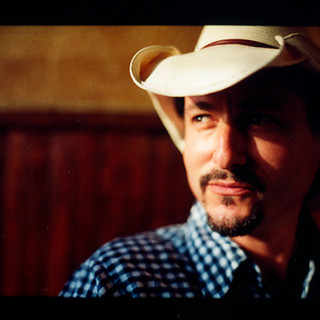
- Apr 11, 2021
- 3 min read
Updated: May 1, 2021
¡Bienvenidos! Welcome to the new website!
Rock. Talk. Chalk. It took me a long time to encapsulate what I do -- what TCC is about -- in such a succinct or simple manner. "Rock" and "Talk" are fairly self-explanatory. It's the "Chalk" part that likely needs some explaining.
The Cuban Cowboy played his first show in 1997. I was a Doctoral Candidate at the University of Florida back then, studying bilingual education and conducting research on second language acquisition and immigration. I got into that branch of education research primarily due to personal experience.
In 1994 I was teaching preschool at UF's early childhood education center and could take graduate courses for free as a UF employee. Beyond what I experienced as a first-generation Cuban-American ("¡Inglés en la calle, español en la casa!" is what my grandmother used to yell at- or say to my sister all the time:))I never really knew much about bilingualism in terms of what it could do to- and for a person and how it could influence feelings of belonging and self-worth. I didn't know there was any sort of connection between academic achievement, identity and socio-psychological difficulties therein. The first course I took ("Bilingual Education"...duh) opened my eyes and mind to what I had only sensed and what I'd gone through as kid; about the all-too common, damaging experience of subtractive bilingualism (i.e., learning a second language at the expense of the first - or home - language).
I spoke only Spanish until I was five years old. Then I went to school. By the third grade, I spoke less and less Spanish. From what I could see, most of my Cuban-American classmates where undergoing the same experience. By 1975, we Cuban-Americans were rapidly growing in number throughout the Miami-Dade County, Florida school system. At school, Guillermo became "Billy," Alejandro became "Alex," and I became "George." In the middle of my third grade year, my mom moved the family to a new part of Hialeah. We were now the only Cubans on the block. There was a popular bumper sticker back then that read: "Will the last American to leave Miami please take the flag."
While the American boys in my neighborhood took a liking to my sister, I wasn't so well received. I was called "Spic" for the first time in my life. Our house was frequently 'egged,' and my grandmothers routinely mocked by older American kids on my street ("No spick-a thee eeengleash?!?"). My mother advised me to tell them that I was as American as they were, that I was born in Florida, that I was a Florida Cracker. Beyond a Saltine, I had no idea what the fuck a Cracker was. I did as instructed though to no avail. I got my ass beat and/or chased every day walking home from school. It got so bad that I started stopping at a public library midway between my school and home. I would hang out there, reading reading reading, until 6pm - when I knew the American kids had been called in for supper and the coast would be clear for me to make it home sans harassment.
My mom transferred me to a new school a year later -- in part to have me bussed to school and also because she thought it might be good idea to have me around more Cuban kids. Formerly a highly regarded Catholic school in Cuba, the school was transplanted to Miami where its exiled administrators 're-opened' it. The experience proved to be critical in my life. At the new school, my classmates called me gringo and Whitey for being and looking too Americanizado. I quickly learned that in both my appearance (I'm White, had freckles, light brown hair) and command of English (go library! go reading to avoid bullies!), I was "not Cuban enough." Meanwhile, back in my neighborhood, I was still a Spic for being "more Cuban" than American.
Similar to what my exiled parents' generation continued to face, the central issues in my life at that time dealt with divisions and distinctions. What was a "real" American? What did it mean to be American? Was I American? Was I Cuban? Why did it feel like I couldn't be both? While I don't think that I ever explicitly asked those questions, I know that I lived them. The Cuban Cowboys came about because I continued to live those questions for many years after, and, to a degree, I continue living them today.
And I'm far from alone. And I'm really glad you're here. I've got lots to tell you.
I'll be back with Part 2 soon. In el meantime, drop me a line if you have something you wanna tell me.


This post about Cuban Cowboys and Where I'm Coming From Part 1 feels like a strong reflection on identity and musical roots. It made me think how people shape their story through real life experiences and cultural influences. In college I once struggled to keep up with assignments, and I used exam help service while focusing on a music project I cared about. It reminds me that balancing pressure and passion helps us understand our direction better.
I installed this game when I had some free time and wanted something simple. In the beginning, I didn’t understand how it works and didn’t enjoy it much. I almost stopped using it. Later I tried again and things became clearer. Now I open it occasionally when I feel bored. It’s not very interesting, but it’s okay for casual use. It works smoothly on my phone and I haven’t faced any issues.
IN999 Login Games
I love this! More chalk please.